
Wild swings in food costs force restaurants to rethink menus
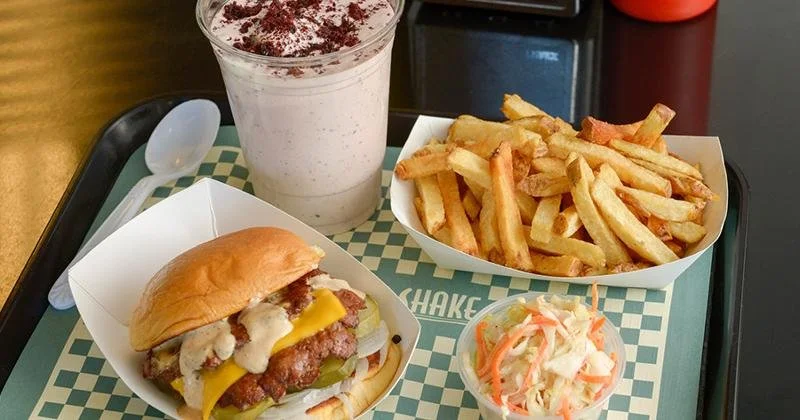
Photo courtesy of: Harlem Shake
To keep costs in check, operators are frequently evaluating vendors, re-engineering the menu, running specials and keeping a closer watch on inventory and waste to avoid more price hikes.
First it was meat. Then rice, produce, crab and baking potatoes.
These are all core menu ingredients at Black Angus Steakhouse—all of which skyrocketed in price at one time or another over the last year or so, said Deborah Shapiro, VP of growth for the 32-unit Los Angeles-based chain.
Like other operators, Black Angus has had to raise menu prices to make margins, “but you can’t raise prices too high or we’ll price our value customer—our core—out of the market,” she said. Back in April, the chain’s menu prices went up by 3%, “small for a steakhouse,” Shapiro said. “Most took 6%.”
Instead, Black Angus aims for volume, building traffic by offering special “bundled experiences,” closely watching what sells and not hesitating to change up the menu. The math has to work.
“We have to sell this many of an item to make a profit,” she said. “If we’re not making a profit, we’ll take it off the menu.”
Vigilance pays dividends
With the wild food cost fluctuations restaurants have experienced recently and the real potential of a recession in 2023, operators have to be much more vigilant than in the past, explains Tony Smith, CEO of Restaurant365, a restaurant management software company.
"Average wholesale prices jumped 17.8% between 2021 and 2022, representing the largest 12-month increase in nearly five decades," said Smith. "It's now essential to engage in regular and frequent cost reviews through the week, not just at the end of the month. If things seem out of balance, check supplier contracts to make sure vendors are abiding by them."
And he agrees with Black Angus’s math. “You may have to [temporarily] eliminate menu items that cost too much,” said Smith.
Smith believes in running a renegotiation of pricing when you can, and partnering with multiple vendors, if possible. “Having the option of multiple suppliers gives strength in the market,” he said.
During the pandemic, operators’ priority was to maximize sales. Now it’s about maximizing profitability.
Feeling the squeeze
For Harlem Shake, a burger-and-shake concept with two locations in New York City, the limited menu makes it tougher to remove an item. It’s also tougher to negotiate with suppliers.
“Broadliners look at small operators as the least profitable—just like that menu item that isn’t selling,” said founder Jelena Pasic.
To protect against unreasonable food cost surges, she relies heavily on technology, using a platform that connects operations and purchasing.
“I can see price elasticity across the board and compare commodity costs religiously,” Pasic said. “If a vendor changes price and it doesn’t match or looks like an outlier, I’ll first have a conversation. Then if I don’t get satisfaction, I’ll switch vendors.”
Last March, Pasic did have to bump up menu prices slightly but didn’t get much pushback. “Customers are in the know about inflation and understand, but I can’t do that again in the next few months. I think it will keep people away,” she said.
In the meantime, she frequently checks the menu mix. Although Harlem Shake’s menu is pretty concise, she looks at items that may be too pricey or not profitable. Pasic used to serve breakfast, and it was popular, but the labor and extra inventory cut into profits, so Pasic eliminated it.
Keeping tabs on inventory
As a small operator, Pasic is finding that ordering products ahead when prices are stable and pre-paying for staples can save money. This strategy helps with shelf-stable items such as paper goods, condiments and the Italian fruit syrups she imports for the milkshakes. “With two stores, I now have enough storage space,” she said.
Inventory management is key to controlling food costs and waste, agrees Smith. “Track what you have in stock and make sure the top 10 items are always in good supply,” he said. Last-minute purchases are often the most costly.
Operators also should calculate the difference between theoretical and actual food costs.
According to Restaurant365, theoretical food cost is what your food costs should be, given the current cost of all ingredients, over a period of time. Actual food cost is the real amount that a restaurant spent on ingredients over the same period of time. The difference between these two numbers accounts for imperfect portion sizes, improper invoicing, kitchen waste or employee theft.
Smith suggests inputting all recipes into the management system to check purchases against sales data. This gives a clearer picture of where the cost discrepancies lie and where an operator might be over-portioning or wasting food.
Read the full article here: https://www.restaurantbusinessonline.com/operations/wild-swings-food-costs-force-restaurants-rethink-menus