
Wild swings in food costs force restaurants to rethink menu
To keep costs in check, operators are frequently evaluating vendors, re-engineering the menu, running specials and keeping a closer watch on inventory and waste to avoid more price hikes.
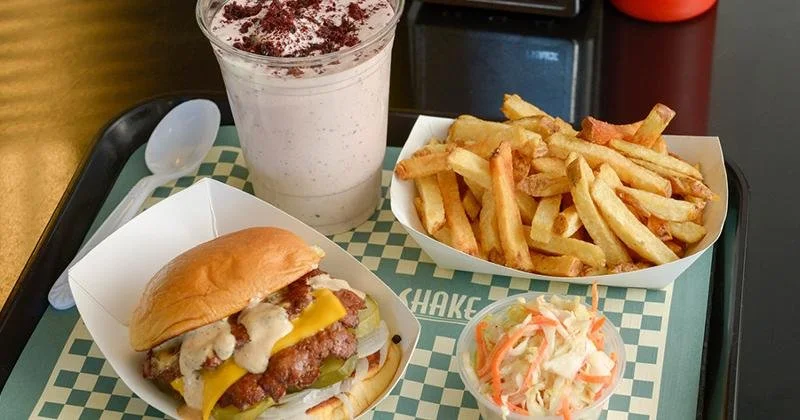
Photograph courtesy of Harlemshake
First it was meat. Then rice, produce, crab and baking potatoes.
These are all core menu ingredients at Black Angus Steakhouse—all of which skyrocketed in price at one time or another over the last year or so, said Deborah Shapiro, VP of growth for the 32-unit Los Angeles-based chain.
Like other operators, Black Angus has had to raise menu prices to make margins, “but you can’t raise prices too high or we’ll price our value customer—our core—out of the market,” she said. Back in April, the chain’s menu prices went up by 3%, “small for a steakhouse,” Shapiro said. “Most took 6%.”
Feeling the squeeze
For Harlem Shake, a burger-and-shake concept with two locations in New York City, the limited menu makes it tougher to remove an item. It’s also tougher to negotiate with suppliers.
“Broadliners look at small operators as the least profitable—just like that menu item that isn’t selling,” said founder Jelena Pasic.
To protect against unreasonable food cost surges, she relies heavily on technology, using a platform that connects operations and purchasing.
“I can see price elasticity across the board and compare commodity costs religiously,” Pasic said. “If a vendor changes price and it doesn’t match or looks like an outlier, I’ll first have a conversation. Then if I don’t get satisfaction, I’ll switch vendors.”
Last March, Pasic did have to bump up menu prices slightly but didn’t get much pushback. “Customers are in the know about inflation and understand, but I can’t do that again in the next few months. I think it will keep people away,” she said.
In the meantime, she frequently checks the menu mix. Although Harlem Shake’s menu is pretty concise, she looks at items that may be too pricey or not profitable. Pasic used to serve breakfast, and it was popular, but the labor and extra inventory cut into profits, so Pasic eliminated it.
Read the full article here: https://www.restaurantbusinessonline.com/operations/wild-swings-food-costs-force-restaurants-rethink-menus